

Ready to pick up double-digit wheel horsepower without resorting to a straight pipe? For performance enthusiasts, the aftermarket exhaust system is a primary source of untapped power. However, deleting the catalytic converter means dealing with harsh fumes, a check engine light, and failing your state’s emissions test.
A high-flow catalytic converter is the ultimate solution, engineered to maximize exhaust flow while still cleaning up harmful emissions. It’s the key to unlocking significant, dyno-proven gains while maintaining street-legal confidence.
At Private Label MFG, we stand behind this power with products proudly made in the USA, backed by free shipping and a lifetime shell warranty.
Catalytic Converters 101: OEM vs. High-Flow
Your vehicle's original equipment manufacturer (OEM) catalytic converter is designed with one primary goal: emissions control. To achieve this, manufacturers use a dense ceramic substrate. In fact, research shows that cell densities of 600 cells per square inch (cpsi) have already been commercialized. While effective at scrubbing exhaust gases, this dense honeycomb structure creates significant back-pressure, acting like a bottleneck that restricts engine performance.
High-flow technology revolutionizes this concept. Manufacturers are developing catalysts with substrates that utilize thinner walls in order to design higher cell density and low thermal mass catalysts, improving flow. This allows exhaust gases to exit faster, enabling the engine to breathe better and produce more power and torque.
Many enthusiasts worry that "high-flow" means failing an emissions test, but that's a common misconception. Some high-flow catalytic converters are designed for enhanced exhaust flow, performance, and emissions compliance.
Top High-Flow Catalytic Converters
Now that you know what to look for, let's explore PLM's lineup. Each model is engineered for a specific type of enthusiast, from the daily driver to the dedicated track car.
1. PLM High Flow Performance 400 Cell EPA Metallic Catalytic Converter

This is the workhorse of our lineup, designed for enthusiasts who want a significant performance boost without compromising emissions compliance. It's the perfect first step for anyone looking to de-restrict their exhaust system. Its 400-cell metallic core strikes an ideal balance between improved exhaust flow and effective emissions scrubbing, ensuring you pass federal inspections.
2. PLM Power Driven High Flow Performance Metallic Catalytic Converter

Built specifically for turbocharged applications, the Power Driven model is all about relieving back-pressure. Turbo engines are extremely sensitive to exhaust restrictions, and reducing back-pressure allows the turbo to spool faster and hold boost more efficiently. We engineered this unit with a lower cell density and a full 3.0" flow path to maximize throughput.
The flanges are extra thick to prevent warping under high heat, and the TIG welds are meticulously crafted for durability under pressure.
3. PLM Power Driven 3-Way Adjustable Catalytic Converter
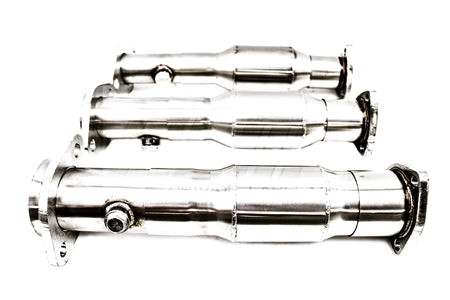
The 3-Way Adjustable cat is a game-changer for custom setups. Its innovative design features rotating flanges that allow it to be positioned at three different angles. This solves complex fitment issues that arise when using custom downpipes, exhaust headers, or unique exhaust routing.
|
Pro Tip: For turbocharged vehicles, pair your new high-flow cat with an ECU tune. This maximizes power gains by allowing the engine to fully capitalize on the reduced back-pressure. |
Side-by-Side Comparison Table
To help you decide at a glance, here’s how our top models stack up against each other.
|
Feature |
400-Cell EPA |
Power Driven |
3-Way Adjustable |
|---|---|---|---|
|
Cell Density |
400 CPSI |
200 CPSI |
200 CPSI |
|
Inlet/Outlet |
2.5" / 3.0" |
2.5" / 3.0" |
2.25" / 2.5" / 3.0" |
|
Best For |
Street Performance |
Turbo Builds |
Dual-Use / Track |
How to Choose Your Perfect PLM High-Flow Cat
Selecting the right high-flow catalytic converter isn't just about picking the cheapest or highest-flow option. It's about matching the converter to your specific vehicle, driving style, and local regulations.
Emissions Compliance Requirements
Before anything else, understand your local laws. If you live in a state with emissions testing (especially California with its strict CARB standards), you'll need an EPA-compliant converter with appropriate certification. Track-only vehicles have more flexibility, but street-driven cars must meet federal or state standards to remain legal.
Engine Configuration: Naturally Aspirated vs. Forced Induction
Turbocharged and supercharged engines generate significantly higher exhaust volumes and temperatures than naturally aspirated engines. They require converters with more aggressive flow characteristics and heat-resistant materials.
Cell Density and Flow Capacity
Cell density (measured in cells per square inch, or CPSI) determines the balance between emissions reduction and flow. Lower cell counts (200-300 CPSI) flow more freely but may not meet emissions standards. Higher counts (400+ CPSI) maintain emissions compliance while still improving over stock restrictive cats. Match your cell density to your power goals and legal needs.
Inlet and Outlet Sizing
Your catalytic converter must match your exhaust system's piping diameter. Mismatched sizing creates bottlenecks that negate performance gains. Most street performance builds use 2.5" to 3.0" piping, while high-horsepower turbo applications often require full 3.0" or larger throughout the entire exhaust path.
Installation Complexity and Fitment
Standard bolt-in converters work for most applications, but custom builds (engine swaps, relocated turbos, modified suspension) may require adjustable or universal converters. Consider your fabrication skills and available tools. Some installations are straightforward bolt-ons; others require welding and custom fitment.
Budget and Warranty Coverage
High-flow cats range from budget-friendly options to premium units with lifetime warranties. Consider the total cost of ownership: a slightly more expensive converter with better warranty coverage and proven durability often costs less long-term than repeatedly replacing cheaper units that fail under high heat and stress.
Why You Should Upgrade Your Exhaust System
Your catalytic converter is one of the most restrictive components in your exhaust system. From the factory, manufacturers prioritize cost-cutting and minimum emissions standards over performance, creating a bottleneck that chokes your engine's ability to breathe.
A high-flow catalytic converter removes this restriction, delivering immediate improvements in throttle response, power across the RPM range, and a deeper exhaust note. For turbocharged builds, you'll see faster spool, better boost retention, and lower exhaust gas temperatures.
Unlike test pipes or gutted cats, a quality high-flow converter maintains emissions compliance while unlocking performance. You stay street-legal, pass inspections, and avoid check engine lights while gaining the power your engine was designed to produce. It's a foundation mod that complements every other upgrade, making it one of the smartest investments in your build.
If you've already added an intake, exhaust, or tune, your stock cat is likely holding back additional gains. Even on a stock engine, the difference is immediately noticeable.
Ready to stop leaving power on the table? Explore the high-flow catalytic converter lineup at PrivateLabelMFG.com now and find the perfect match for your build.


Leave a comment